The groom alongside his family and friends dance their way to the wedding venue with lively high-energetic music. The priest hands a bowl of coins wrapped in a cloth to the groom's sister which she moves around the groom's head a couple of times. The coin sounds are supposed to ward off evil spirits. The groom's sister performs this ritual also to remind her brother that even though he's getting married, he should not forget his sister!

Baraat
(The grooms reception)
The groom is welcomed by the bride's family at the wedding venue entrance. The bride's mother performs welcome rituals and gives her blessings. There’s also a playful part where bride’s mother attempts to pull the groom's nose reminding him to be humble as he's here to ask their daughter's hand. The groom in return tries to escape the nose-pulling making this ritual joyful.
Jaan Agman
(Welcoming of groom)

The ceremony begins with a prayer honoring Lord Ganesh, the remover of obstacles. Per Hindu tradition, Lord Ganesh is worshipped before starting any new chapter in one's life. After this the groom is honored by the bride's parents.
SHHH... as the groom walks to the mandap, the bride's family will attempt to steal the his shoes. His shoes will be held ransom until he digs deep into his pockets to get them back! This fun tradition is meant to show the acceptance and open hearts of both sides of the family and how willing and ready they are to share lifetime of laughter and fun together.
Ganesh Puja / Var Puja
(Prayers to Lord Ganesh)

As the bride enters the mandap, a white cloth (Antarpat), which signifies their separate, independent lives before their marriage. When the priest finishes chanting specific mantras, the cloth is lowered, symbolizing the two souls coming together as one
Kanya Agman
(Arrival of the bride)

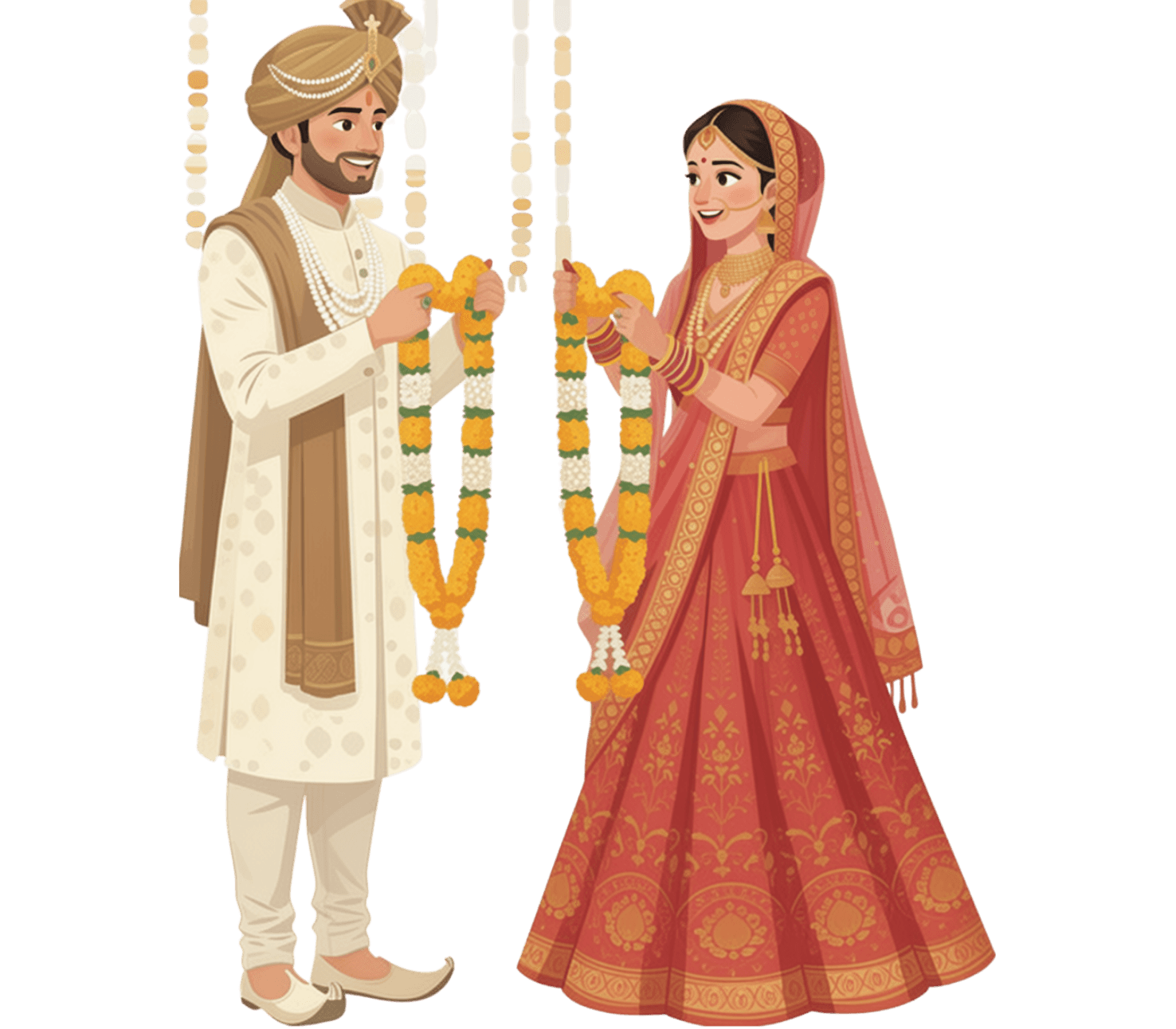
The bride and groom greet each other by exchanging flower garlands symbolizing their acceptance of each other as lifelong partners.
Jai Mala
(Exchanging of the garlands)
In this ritual, the bride and groom join hands with parental blessing as a symbolic gesture of trust, love, and family unity. The priest ties the holy knot by joining the groom's shawl and the bride's dupatta signifying the unification of two souls.
Kanyadaan & Hasta Melap
(Joining of the hands)

The Saptapadi Ritual is one of the most crucial ones in a Gujarati wedding. The bride and the groom take seven steps together while taking seven vows of the holy matrimony. The seven vows include the promises to love, respect, take care of each other, and be eternally together.
Saptapadi
(The seven steps)

The groom ties a mangalsutra necklace and places sindoor bride's hair mid parting, symbolizing his lifelong protection of the bride.
Mangalsutra & Sindoor
(The adornment)

In Mangal Pheras the couple takes four circles around the holy fire while chanting mantras depicting oaths to be with each other throughout their lives. The four pheras each signify "Dharma", "Artha", "Kama" and "Moksha" respectively and are the four pillars of a happy married life.
As a fun tradition, at the end of the fourth phera, the bride and groom will run to sit down first. It is said that the one who finds a seat first will rule the house.
Mangal Pheras
(Circling the holy fire)

The newly married couple feeds sweets to each other, which is known as the Kansar at the end of the wedding ceremony. This act symbolizes the couple's vow to share everything they have in life.
Kansor Bhojan
(The couple's first meal)

Married woman from both the bride and groom's side whisper "Akhand Saubhagyavati" in the bride's ear, which means "may your marital life flourish with eternal glory."
Akhand Saubhagyavati
(Blessings from married woman)

The bride and groom bow to their parents and other family elders to ask for their blessings. Finally, they return to ask for the blessings from the Priest. The Priest on behalf of the gods and all gathered guests, blesses the couple with wishes of everlasting happiness and a prosperous married life.
Aashirvad
(Blessings)

In the last step of the ceremony, the newly married couple bid farewell as they begin their new life. The bride tosses handfuls of rice and coins backward over her head. This act thanks her parents for raising her and wishes them lasting wealth and prosperity.
Vidaai
(Farewell)

Thank you from the bottom of our hearts for joining us on our special day. Your presence and warm wishes made our wedding truly memorable and filled with love. We cannot wait the keep the party going and celebrate with you tonight!
-Hemali & Darshan
GUJARATI WEDDING
CEREMONY GUIDE
THE GUJARATI WEDDING
CEREMONY GUIDE FOR
CLICK HERE FOR THE WEDDING BETTING GAME
Hemali & Darshan
